A Brighter 2026: Progress Through Community
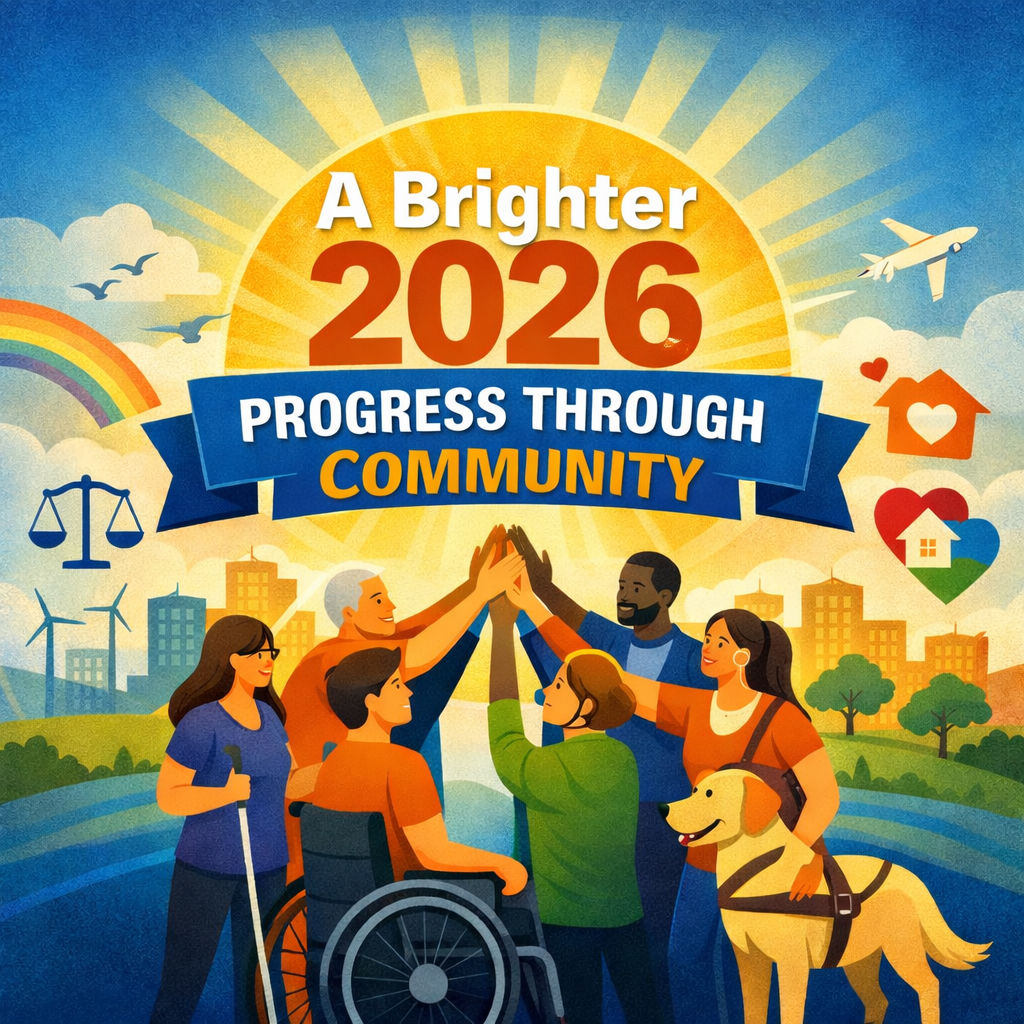
The past year reminded us of a difficult truth: disability rights in the United States remain fragile, contested, and—far too often—rolled back. At the same time, it reaffirmed something just as powerful. When communities come together, when we refuse to be silent, and when we insist on a world where everyone belongs, progress is not only possible—it is inevitable.
As we look toward 2026, disabled people and their allies face challenges across nearly every system meant to protect dignity, opportunity, and equality. Yet each challenge also serves as a catalyst for collective action—and a reminder that community is our greatest strength.
Bodily Autonomy Under Threat
In 31 states and Washington, D.C., laws still allow the forced sterilization of disabled people through guardianship and court processes—without their consent. This reality calls for a renewed commitment to bodily autonomy, human dignity, and self-determination, alongside sustained advocacy for policy reform that protects every person’s right to make decisions about their own body.
Education Access at Risk
Efforts to dismantle the U.S. Department of Education threaten enforcement of IDEA and Section 504, potentially weakening protections for millions of disabled students. This moment invites families, educators, and advocates to stand together and demand equitable, fully resourced, inclusive education—because every child deserves the opportunity to thrive.
Subminimum Wages Persist
Under Section 14(c), disabled workers can still legally be paid below minimum wage. As more states move to phase out this outdated practice, momentum is building toward a future where disabled people are valued, respected, and paid fairly for their labor—no exceptions.
Marriage Inequality
The SSI “marriage penalty” continues to force disabled people to choose between love and financial survival. By centering lived experiences, uplifting stories, and pushing for reform, we can ensure that no one is punished for building a life with the person they love.
Disability Rights Enforcement Rolled Back
In March 2025, the Department of Justice withdrew 11 ADA guidance documents, reducing clarity around accessibility and public access requirements. This rollback is a powerful reminder that progress must be defended—and that sustained, vocal advocacy is essential to restoring and strengthening protections our communities rely on.
Accessibility Standards Weakened
The Department of Energy rescinded accessibility requirements tied to federally assisted construction. Even so, communities and allies are organizing to ensure future building standards reflect the needs of all people—creating spaces where everyone can live, work, and participate fully.
Unsafe and Dehumanizing Air Travel
Disabled travelers continue to experience preventable harm due to unsafe transfers, damaged mobility equipment, and delayed enforcement of historic 2024 protections. In response, activists, travelers, and industry partners are pushing for accountability and reform—working toward air travel that is safe, dignified, and accessible for all.
Barriers to Employment
Systemic obstacles to hiring, advancement, transportation, and benefits continue to limit economic opportunity for disabled people. By challenging outdated systems and embracing flexibility and innovation, we can build an economy where disabled people not only work—but lead.
Lack of Representation in Media
Disabled people remain underrepresented in television and film, with most disability roles still portrayed by non-disabled actors. As awareness grows, so does the demand for authentic storytelling—creating momentum for a media landscape where disabled voices and talents are truly seen, heard, and valued.
Healthcare Affordability Eroded
Changes to the ACA marketplace are raising costs for millions, disproportionately affecting disabled people. This underscores the urgency of advocating for affordable, accessible healthcare and policies that protect—not endanger—the health and futures of our communities.
Medicaid and Healthcare Access Under Attack
The 2025 federal budget includes changes that threaten Medicaid coverage, with work requirements set to impact millions beginning in 2027. Across the country, communities are mobilizing to defend healthcare access and protect the essential services people depend on.
Economic Security Designed to Be Fragile
Policies across SSI, Medicaid, and other support systems continue to penalize savings, stability, marriage, and sometimes work itself. Still, reform movements are growing—and through collective action, we can build systems that promote stability, wealth-building, and long-term security for disabled communities.
Disabled People Left Behind in Disasters
Emergency planning too often excludes disabled people, putting lives at risk during natural disasters. Disability-centered emergency preparedness and community-led planning are on the rise, offering a path toward safer, more inclusive futures for everyone.
Looking Ahead: Progress Through Belonging
In January, we honored the legacy of Dr. Martin Luther King Jr., who reminded us that justice is not inevitable—it is built through courage, solidarity, and unwavering love for our communities. As we move into 2026, we carry that legacy forward.
Together, we continue building:
A world rooted in justice.
A world strengthened by community.
A world where everyone belongs.