
Casa Familia: A New Model for Independent Living in Miami
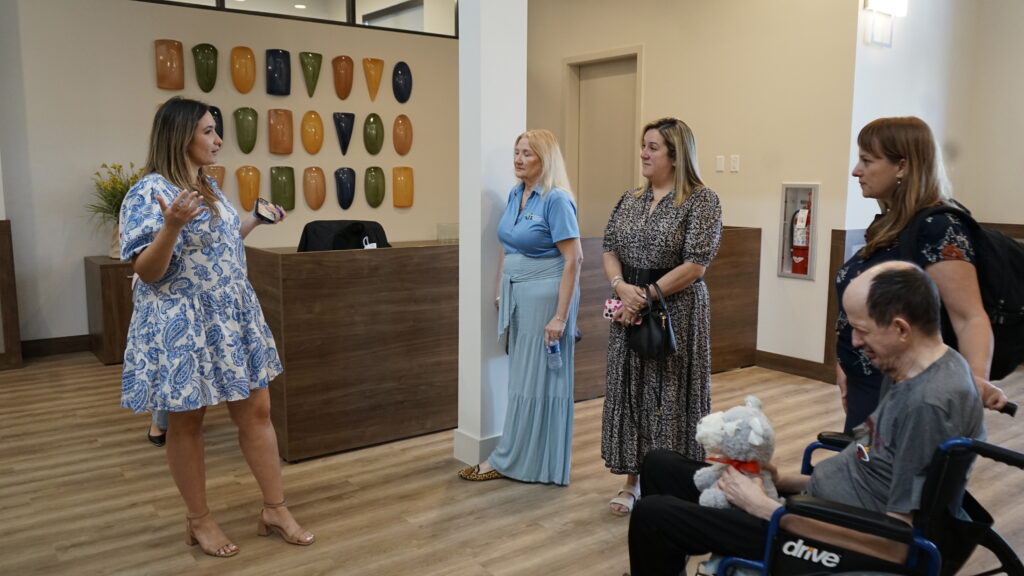
Recently, the Advocacy Network on Disabilities had the opportunity to tour Casa Familia, an innovative independent living community designed for adults with intellectual, developmental disabilities and other disabilities.
Led by Nicole Miller, from the Casa Familia team, the visit offered an in-depth look at what happens when accessibility, autonomy, and intentional design come together in one place.
What we saw was more than housing. It was infrastructure for independence.
A Vision Rooted in Family Advocacy
Casa Familia was founded by two families—Marie Ilene Whitehurst and Karin Jawitz—who asked a question many parents of individuals with disabilities quietly carry:
What happens to our children when we are no longer here?
That question sparked a movement. Together with other families and partners, they helped build a model focused not on supervision, but on dignity, community integration, and sustainable independence.
Today, the development represents a collaborative effort between three key entities:
- Casa Familia
- Sunrise Communities
- Royal American Management
Each partner plays a distinct role:
- Casa Familia anchors the mission and long-term vision.
- Sunrise Communities provides on-campus supported living services and resident assessments.
- Royal American Management oversees property management and affordable housing compliance.
Together, they have created a model that blends housing, services, and professional property management — a combination that is rarely integrated this intentionally.
Accessibility in the Details
One powerful example: the mailroom.
A resident who uses a wheelchair shared that it was the first time he could retrieve his own mail independently because the mailboxes were placed at an accessible height. A simple design decision—but a meaningful shift in autonomy.
Throughout the campus, visibility and layout were intentionally designed so residents can easily see staff offices, activity spaces, and community areas without feeling lost or isolated. The environment promotes connection while preserving privacy.
Built for Adult Life — Not Institutional Living
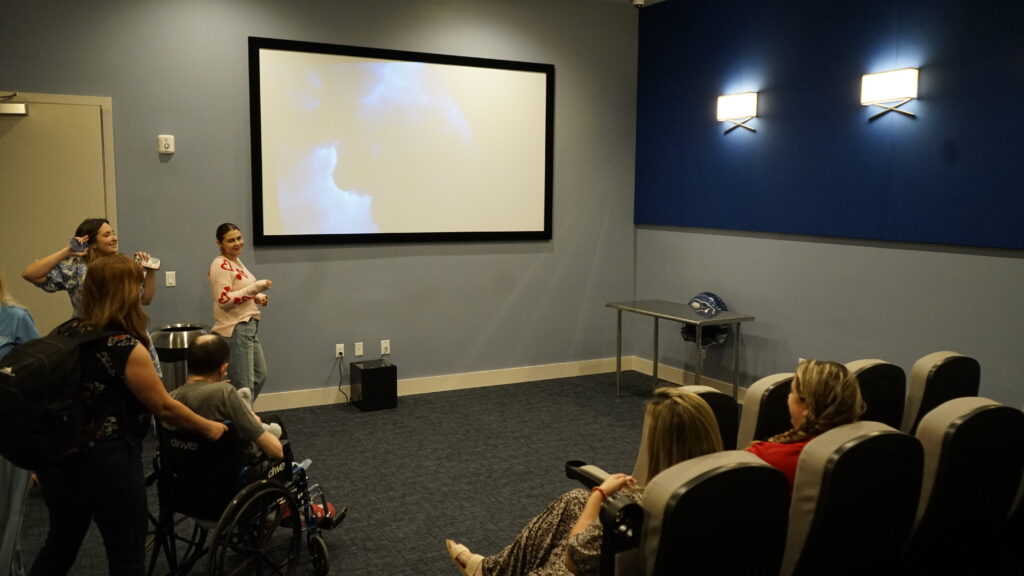
Casa Familia offers:
- An Internet Café for work, socialization, and digital learning
- A multipurpose room with optional affordable meal plans
- A teaching kitchen modeled after residents’ own apartment kitchens for skill-building
- A fully equipped art studio focused on professional, adult-level programming
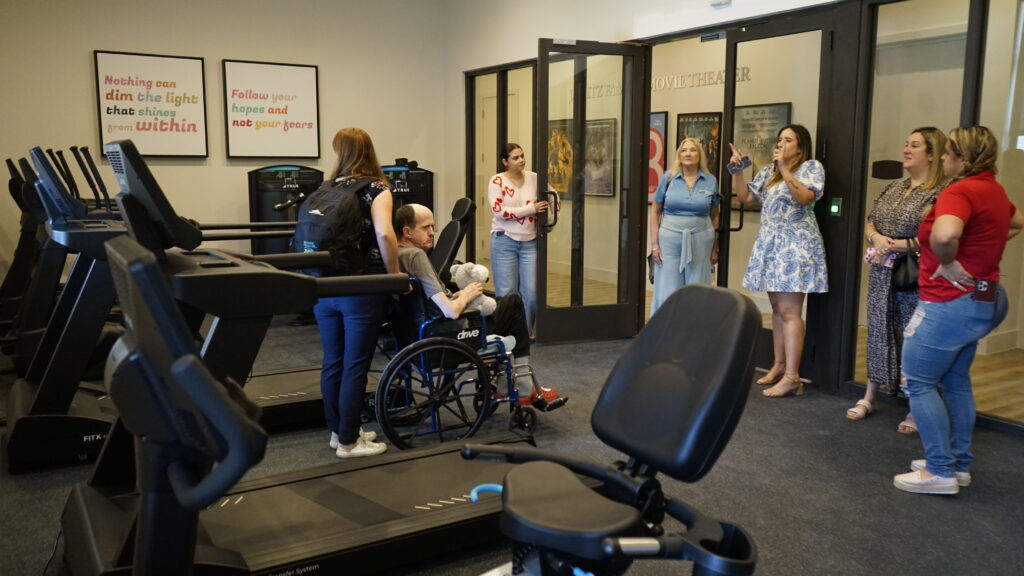
- A game room and fitness center
- A Serenity Suite — a decompression space for sensory regulation
- Accessible pool and outdoor gathering areas
Programming is not imposed. Residents help shape it. From Dungeons & Dragons nights to fitness classes and art workshops, the goal is meaningful participation—not passive attendance.
Importantly, Casa Familia balances inclusion with boundaries. Adults with disabilities deserve privacy, autonomy, and social spaces that reflect adult life—not extended supervision.
Technology That Supports — Without Surveillance
Smart-home technology integrated into each apartment includes:
- Stove sensors that alert residents if a burner has been left on
- Water sensors that automatically shut off water to prevent flooding
- Door and window alerts
- Customizable reminders such as medication prompts
Alerts escalate only when necessary and respect resident privacy. There are no in-unit surveillance cameras. The system is designed as a safety net—not a monitoring tool.
Residents must actively accept video calls from family members, reinforcing consent and autonomy.
Readiness and Responsibility
Phase One includes 60 independent living apartments and is nearly fully leased. The application and assessment process is comprehensive to ensure residents can live safely and independently with appropriate supports.
Some individuals are referred to alternative settings—such as assisted living facilities (ALFs) or intermediate care facilities (ICFs)—if that model better meets their needs. The goal is not placement at all costs, but sustainable success.
Financial readiness is also a key component. Families learn that certain recurring transfers, benefits, or assets may count as income under affordable housing guidelines. Education around ABLE accounts and special needs trusts is part of the preparation process.
This is not simply about moving in. It is about being prepared to thrive.
Choice in Services
While Sunrise Communities serves as the on-campus service provider offering supported living coaching and personal support services, residents maintain the right to choose their provider.
Supported living coaches may assist with:
- Medical appointment coordination
- Medication management
- Money management
- Social skill development
- Community integration
Mental health services are not provided on-site in Phase One, but referrals and resource guides are available.
Looking Ahead: Expansion Phases
Casa Familia’s expansion plans include:
- Phase Two: A licensed 24/7 assisted living model in smaller home-style settings.
- Phase Three (“The Gardens”): Additional housing units connected to the broader community, expanding affordable housing access and service models.
The long-term goal is to create a continuum of housing that meets individuals where they are—without compromising autonomy or inclusion.
A Replicable Model for Inclusive Housing
Casa Familia demonstrates that independent living for adults with disabilities is not only possible—it is achievable when mission-driven organizations, service providers, and housing professionals work together.
This partnership between Casa Familia, Sunrise Communities, and Royal American Management offers a blueprint for how housing, services, and compliance can align under one coordinated model.
For families, advocates, and policymakers, the message is clear:
Independence is not the absence of support.
It is the presence of the right support.
And when that support is built into the blueprint, communities change.