
Miami Autism Dad Victor Antunez Visits Advocacy Network on Disabilities Staff Meeting

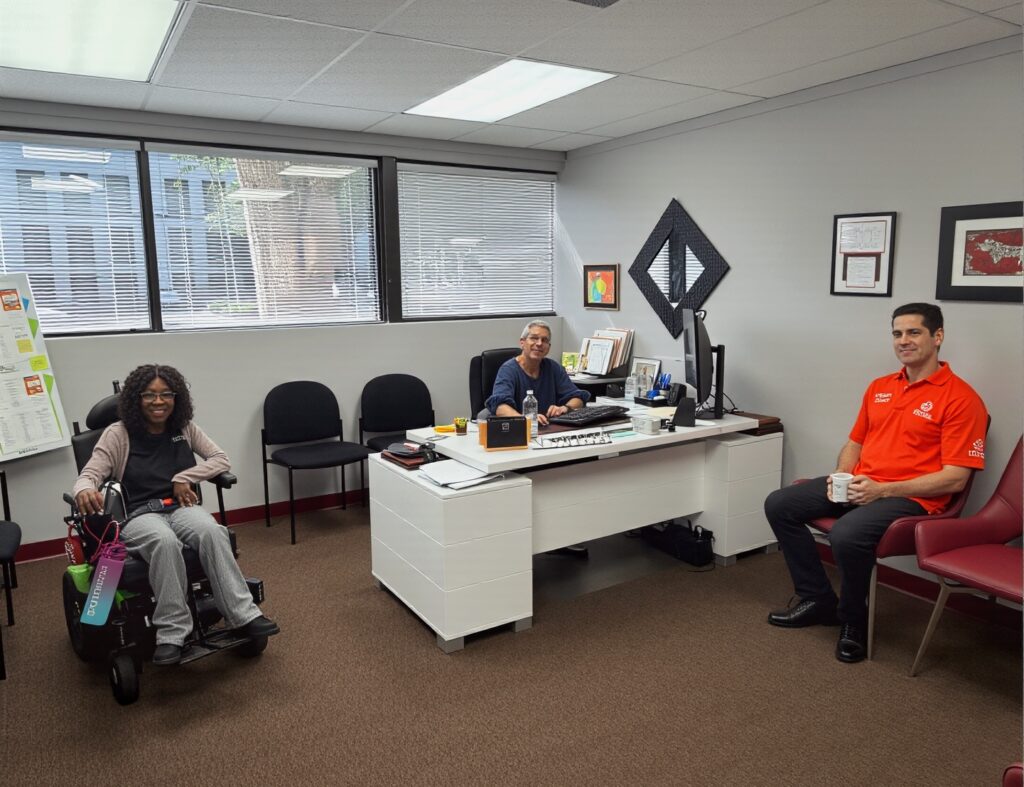
Recently, the Advocacy Network on Disabilities welcomed Victor Antunez, widely known as “Miami Autism Dad,” to one of our all-staff meetings for a thoughtful and energizing conversation with team members across programs.
Victor stopped by to meet staff, learn more about our work, and talk about one of the most persistent challenges facing nonprofits and disability organizations alike: making sure families know help exists.
That challenge resonated deeply throughout the room.
As Victor shared, even in a city as large and connected as Miami, many families still do not know about the services, organizations, and supports available to them. He spoke about meeting caregivers who had lived in Miami for decades and had never heard of key disability resources. It was a powerful reminder that outreach is not secondary to the work — it is part of the work.
At the Advocacy Network on Disabilities, that truth is lived every day.
During the meeting, staff members from across the organization introduced themselves and described the many ways they support children, adults, and families in Miami-Dade and Broward. From success coaching and parent education to trauma-informed therapy, community inclusion, advocacy, housing referrals, and family crisis support, the conversation painted a clear picture of what makes this work so meaningful: it is deeply personal, practical, and rooted in dignity.
Several staff members shared their own connections to the disability community as parents, grandparents, family members, and people with disabilities themselves. Those lived experiences shape how our team shows up for families — not simply as providers, but as people who understand the realities families face and who believe in strength-based, person-centered support.
That theme came up again and again throughout the discussion.
Rather than focusing only on deficits or diagnoses, our staff spoke about the importance of asking families what their loved ones enjoy, how they communicate, what their strengths are, and what support would make daily life more manageable. It is a shift away from a purely medical model of disability and toward a more human approach — one that recognizes abilities, honors individuality, and works to remove barriers.
Victor also brought thoughtful reflections from his own advocacy work, including the importance of language. In talking about communication styles, the conversation highlighted how descriptions should focus on how a person communicates, rather than defining them only by what they do not do. That kind of language matters. It reflects respect, accuracy, and a commitment to seeing the whole person.
The visit also gave staff an opportunity to speak candidly about the realities nonprofits face behind the scenes. Outreach, marketing, and public awareness are essential, yet too often underfunded. As President and CEO Irenaida Diaz noted during the discussion, organizations are often asked how they will spread the word about their services, while rarely being given the resources to do so. Even so, our team continues to show up, build trust, and connect families to support — often one conversation at a time.
That spirit was especially evident in the stories staff shared about walking with families through moments of crisis, uncertainty, and transformation. Whether helping a parent navigate services, supporting a family through overwhelming circumstances, identifying emergency needs, or connecting someone to housing or therapy, each story reflected the same core truth: people need to feel seen, heard, and supported.
Victor’s visit was a meaningful reminder of the value of community connection. It was also a reminder that advocacy grows stronger when people come together to listen, learn, and share what they know.
We are grateful to Victor Antunez for taking the time to visit, engage with our team, and help amplify the importance of visibility, collaboration, and family-centered advocacy.
Because no family should have to struggle simply because they did not know support was out there.